
— Catalogue line
The Spaniards
From the Iberian peninsula
“Jamón Ibérico and Duroc Magnum, selected for the Italian counter”
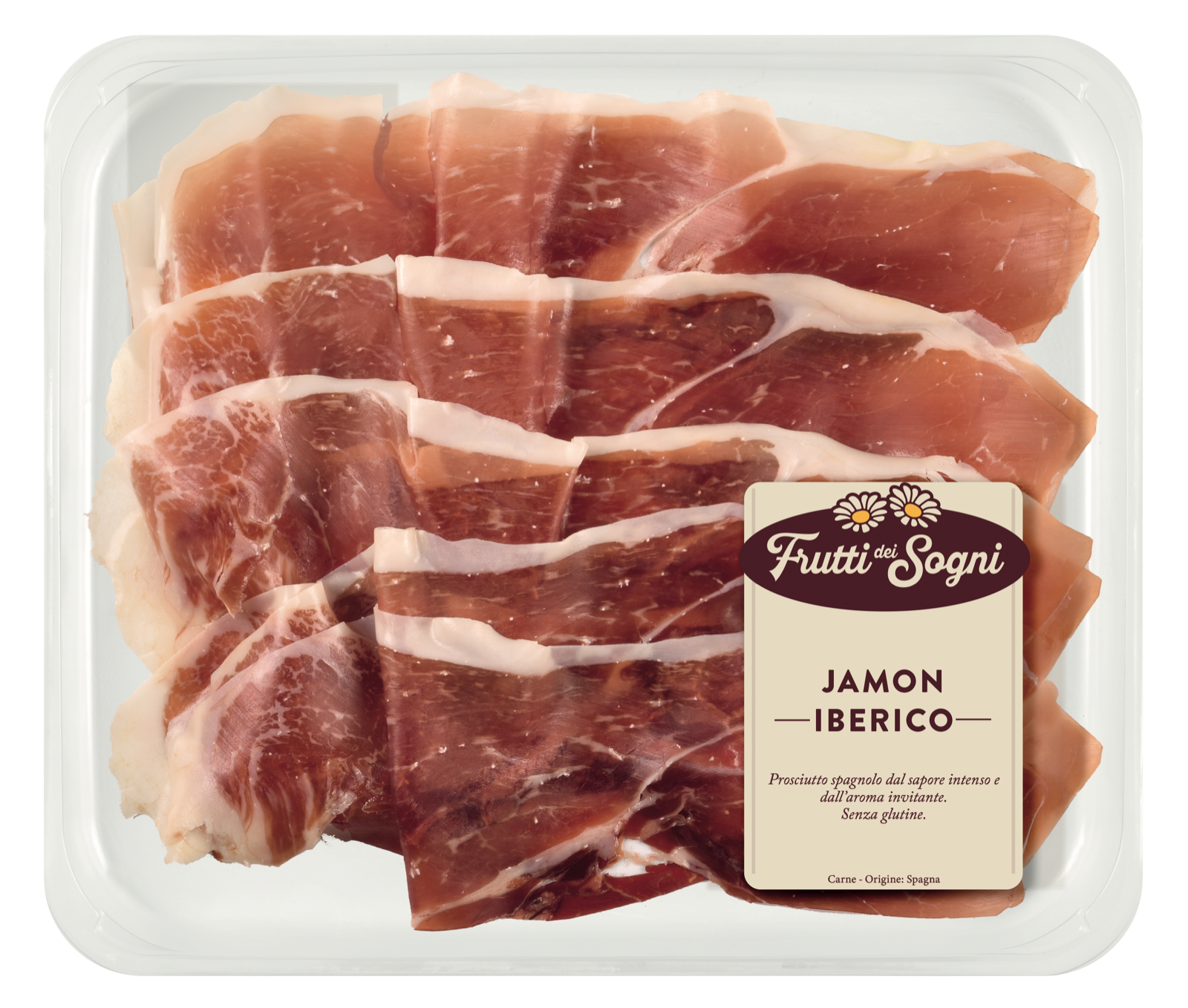
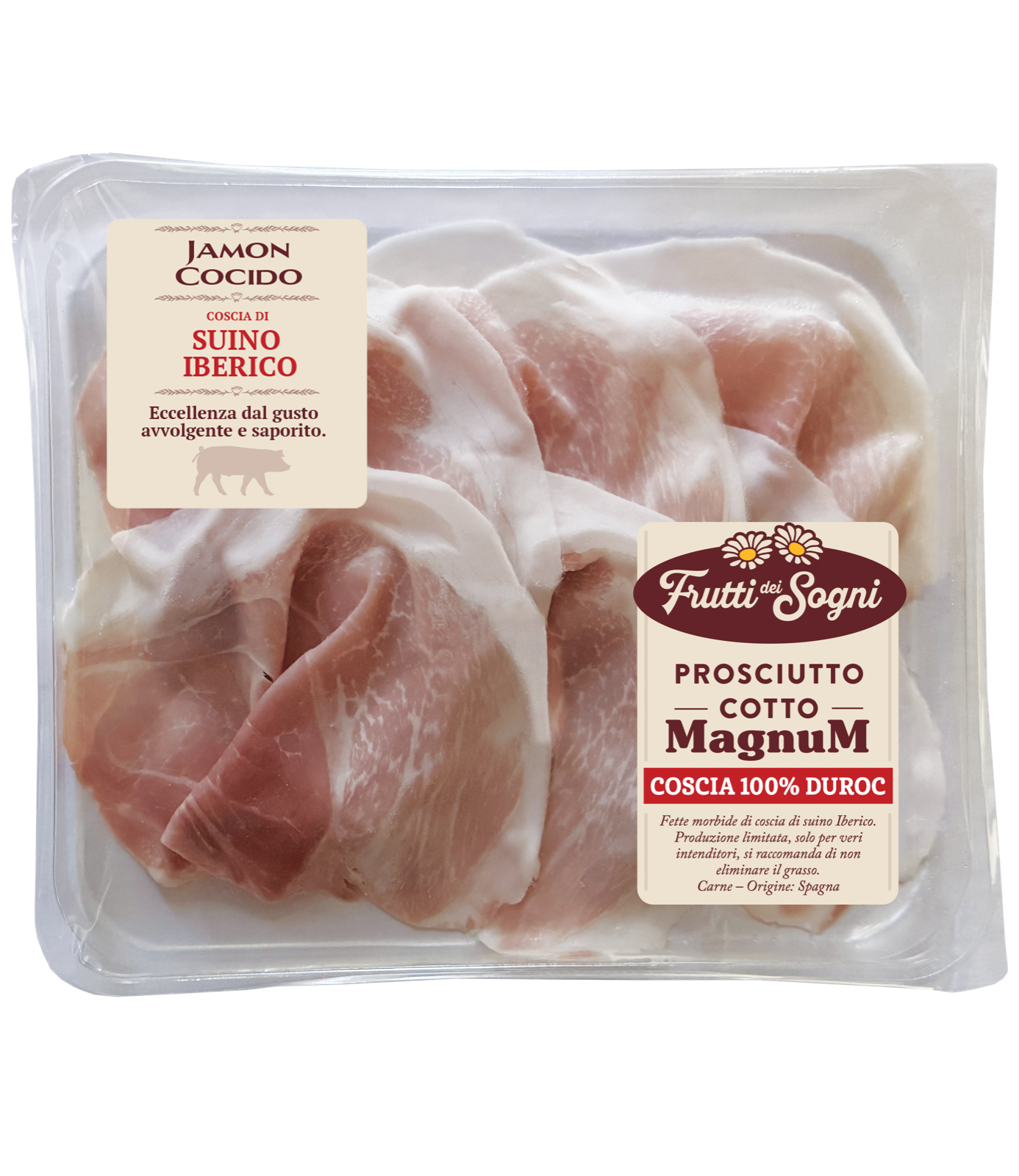
A small Iberian selection that joins the Italian range. Prosciutto Cotto Duroc Magnum brings the sweetness of the Duroc breed to a premium cooked ham, while Jamón Ibérico adds the intense ageing of Spanish dry-cured ham to the counter. Products designed for delicatessens that want to offer, alongside the great Italian PDO products, the most recognisable Iberian highlights.
— The products
— Frequently asked questions
All about The Spaniards
What is Jamón Ibérico and how does it differ from other hams?
Jamón Ibérico is produced in Spain exclusively from pigs of the Iberian breed (at least 50% of the genotype). The supply chain is regulated by the Spanish Norma de Calidad with four categories: Bellota (finished on acorns, 100% Iberico = black label), Cebo de Campo (free-range), Cebo (intensive farming) and Pata Negra (a historic category). Ageing: 24–48 months. A very intense aromatic profile, with characteristic fatty marbling.
What is the difference between Prosciutto Cotto Duroc Magnum and an industrial cooked ham?
The Duroc breed is a pig breed of American origin with high intramuscular marbling (fat well distributed through the fibres), which produces tastier, softer meat than industrial hybrids. "Cotto Magnum" refers to the large format of the whole leg, steam-cooked in a mould and boned: a sweet, juicy profile with compact slices. The term "Magnum" is not a regulated denomination, it is a commercial name that evokes the size.
Why does an Italian charcuterie maker have a Spanish line?
Premium Italian gastronomy increasingly includes the highlights of other European curing traditions (Spanish Jamón Ibérico, French Jambon de Bayonne, Tyrolean Speck). The "Gli Spagnoli" line answers a concrete request from delicatessen counters that want to offer, alongside the great Italian PDO products, the most recognisable international references, keeping the same standard of anatomical cut in the tray.